The Ultimate Multi-Tenancy Checklist for Kubernetes
Explore the ultimate Kubernetes multi-tenancy checklist. Learn how Stakater MTO ensures security, compliance, FinOps, and scalability in shared clusters.
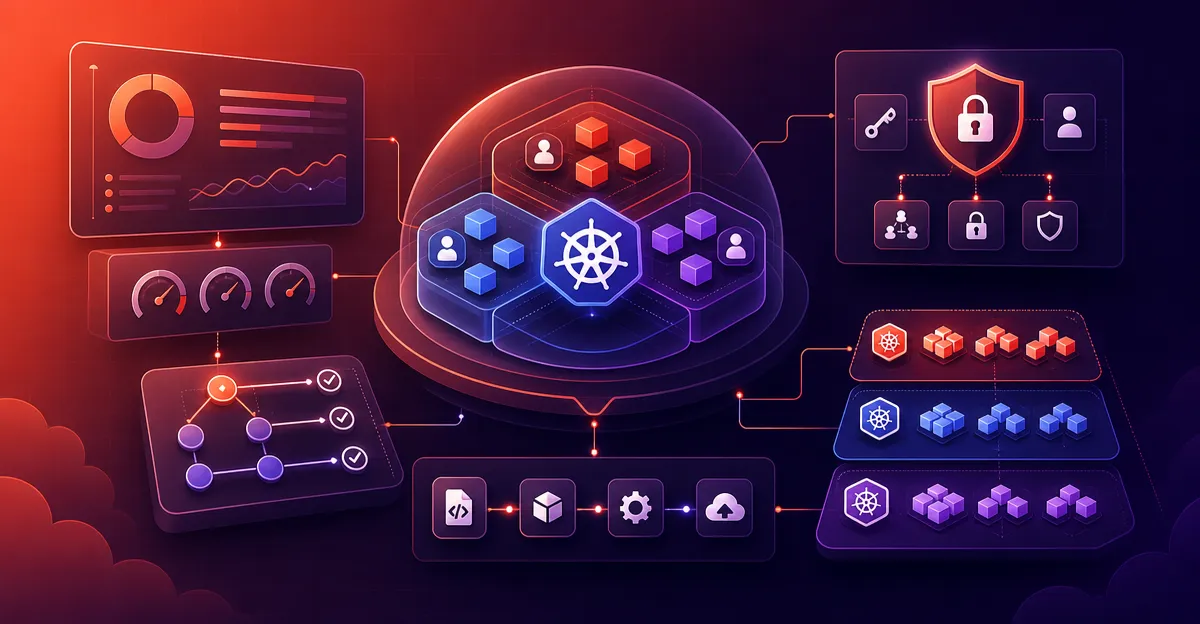
As Kubernetes adoption grows inside organizations, our platform teams face the challenge of securely and efficiently managing multiple teams or tenants on a shared cluster. While namespace-based multi-tenancy is the most cost-effective and scalable approach, doing it right takes more than just creating isolated namespaces.
A production-grade multi-tenancy solution should include a wide range of features — from security controls and policy automation to FinOps capabilities, developer experience improvements, and compliance support.
In this blog, we’ll share the ultimate Kubernetes multi-tenancy checklist, built from years of hands-on experience running secure, scalable platforms with the Stakater Multi-Tenant Operator (MTO).
Isolation and Security
A robust multi-tenancy solution must ensure strong logical separation between tenants.
-
Namespace-based isolation: Each tenant should have a logically isolated environment.
-
RBAC templating: Restrict access based on role and namespace.
-
NetworkPolicies: Ensure no unintended traffic flows between tenants.
-
Pod Security Standards (PSS): Enforce workload hardening by default.
-
Privileged access restrictions: Disable hostPath and privileged containers.
-
Secrets isolation: Prevent any cross-namespace secret exposure.
-
Scoped service accounts: Optionally restrict token propagation and service account impersonation.
Resource Management
Avoid noisy neighbor problems and make the most of our compute resources.
-
ResourceQuotas and LimitRanges: Control how much CPU, memory, and storage each tenant can consume
-
Default limits: Apply sensible defaults to prevent misuse
-
Namespace-specific priority classes: Improve workload scheduling
-
Hibernation support: Pause workloads when idle to free up resources.
-
Capacity planning insights: Analyze usage to guide scaling decisions.
FinOps and Visibility
Support cost transparency and enable tenants to self-manage their usage.
-
Showback reports per namespace: Track CPU, memory, and storage per tenant.
-
Label/annotation cost tracking: Attribute workloads to teams and projects.
-
OpenCost integration: Feed real-time cost metrics into dashboards.
-
Exportable usage reports: Help finance and business units understand platform costs.
Developer Enablement
Empower our teams to build and deploy securely and independently.
-
GitOps-ready configuration: ArgoCD/Kustomize support out of the box
-
Customizable tenant templates: Define reusable environments with tools, limits, and policies baked in
-
Automated onboarding via CRDs: Developers request environments, operators approve
-
Support for Git repositories and CI/CD pipelines per tenant: Optional but powerful
-
User-friendly web console: Let developers view logs, quotas, and status without direct kubectl access
Observability and Auditability
Ensure full transparency across tenants while protecting individual data boundaries.
-
Logging integration: Forward logs with namespace filters (e.g., Loki, Elasticsearch)
-
Metrics dashboards: Grafana with per-tenant views
-
Alerting integration: Scoped Prometheus alert rules
-
Audit trails: Capture tenant creation, deletion, and policy changes
Backup, Recovery, and Data Safety
Make sure tenants can recover from failures and maintain SLAs.
-
Velero integration or equivalent: Protect tenant namespaces
-
Retention policies: Define per-tenant backup strategies
-
Self-service backups: Allow teams to trigger ad-hoc saves
-
Recovery automation: Minimize operator overhead when restoring workloads
Scalability and Governance
Prepare for tenant growth and governance requirements.
-
OPA/Gatekeeper integration: Enforce policies declaratively
-
Policy injection via labels/annotations: Flexible per tenant
-
Tenant groups (future support): Logical organization for large-scale setups
-
Shared services access control: DBs, GitOps tools, monitoring — all securely managed
-
Central management UI: A single place to view and control tenants
Compliance and Regulatory Alignment
Support enterprise and regulated environments with built-in practices.
-
ISO/IEC 27001 alignment: Enforce access control, audit logging, secure configuration, and monitoring practices
-
SOC 2 readiness: Support logical separation, user activity tracking, and backup/recovery protocols
-
Policy automation: Ensure consistent and traceable enforcement of security and compliance policies
-
Evidence-friendly architecture: Provide auditable logs and reports for compliance teams
-
Scoped data access: Prevent data leakage between namespaces
Bonus Features with Stakater MTO
Stakater Multi-Tenant Operator delivers all of the above, plus:
-
GitOps-native: Integrates seamlessly with ArgoCD and Kustomize
-
Tenant CRD: Create environments in under a minute
-
Showback and hibernation: Drive cost savings and insights
-
Templates: Provide consistent environments at scale
-
Console UI: Built for both platform teams and tenant developers
-
Observability & backup: Built-in integrations
-
Compliance-conscious defaults and controls
Final Thoughts
Multi-tenancy on Kubernetes is no longer a nice-to-have — it’s essential for building modern, scalable platforms. But getting it right takes more than namespaces and RBAC.
Use this checklist to benchmark our current solution or plan our next-gen platform architecture. And if we’re looking for a tool that checks every box — from security and observability to FinOps, developer UX, and compliance — Stakater MTO is built for us.
Adopt multi-tenancy with confidence. Build smarter, scale faster, and stay secure.