How to Safely Share One Kubernetes Cluster Across Multiple Teams
Learn how to implement secure, scalable Kubernetes multi-tenancy so teams can share one cluster safely using the right strategy and tools.

As Kubernetes adoption grows across organizations, our platform and DevOps teams face a critical question: Can we safely let multiple internal teams share a single Kubernetes cluster?
The short answer is yes, but only if we’ve got the right strategy and tools in place.
In this blog, we’ll walk through how to implement secure, scalable Kubernetes multi-tenancy so different teams can work independently, without stepping on each other’s toes - all within one shared cluster.
The Problem: Cluster Sprawl and Rising Complexity
Many companies start their Kubernetes journey by spinning up one cluster per team or project. While it might seem like the safest way to keep teams isolated, this approach brings a few problems:
-
High infrastructure and cloud costs
-
Redundant setup and management overhead (monitoring, logging, backups, etc.)
-
Difficulty enforcing consistent policies and governance
-
Fragmented visibility and inconsistent developer experiences
Over time, this leads to what we call cluster sprawl — a bloated, hard-to-manage Kubernetes ecosystem.
The Better Approach: Namespace-Based Multi-Tenancy
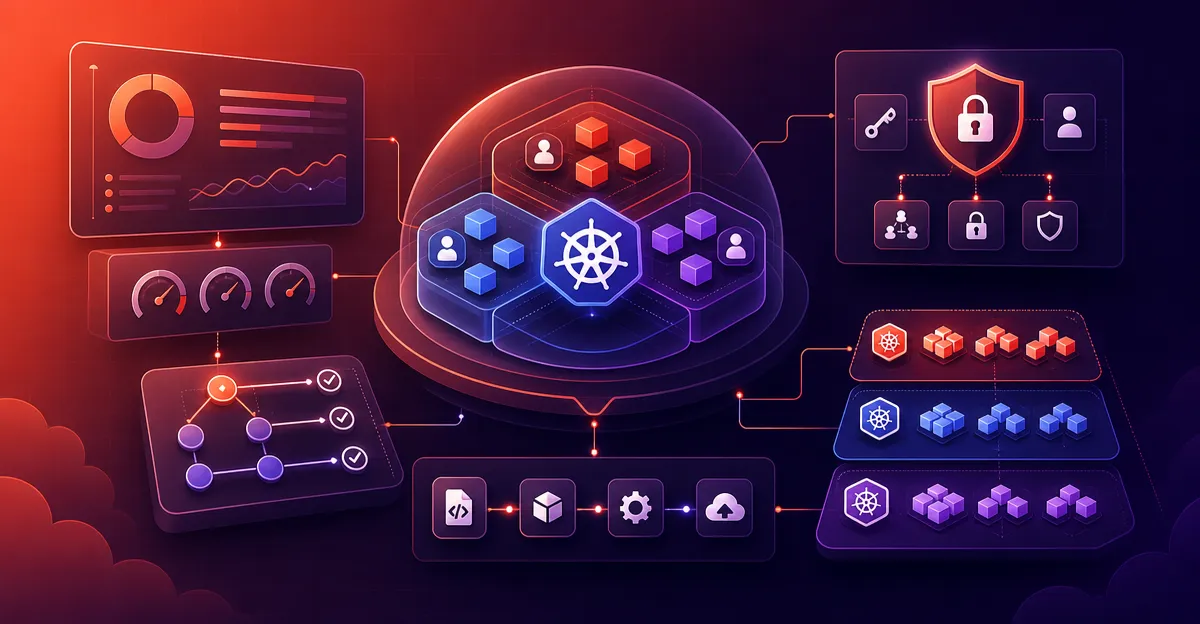
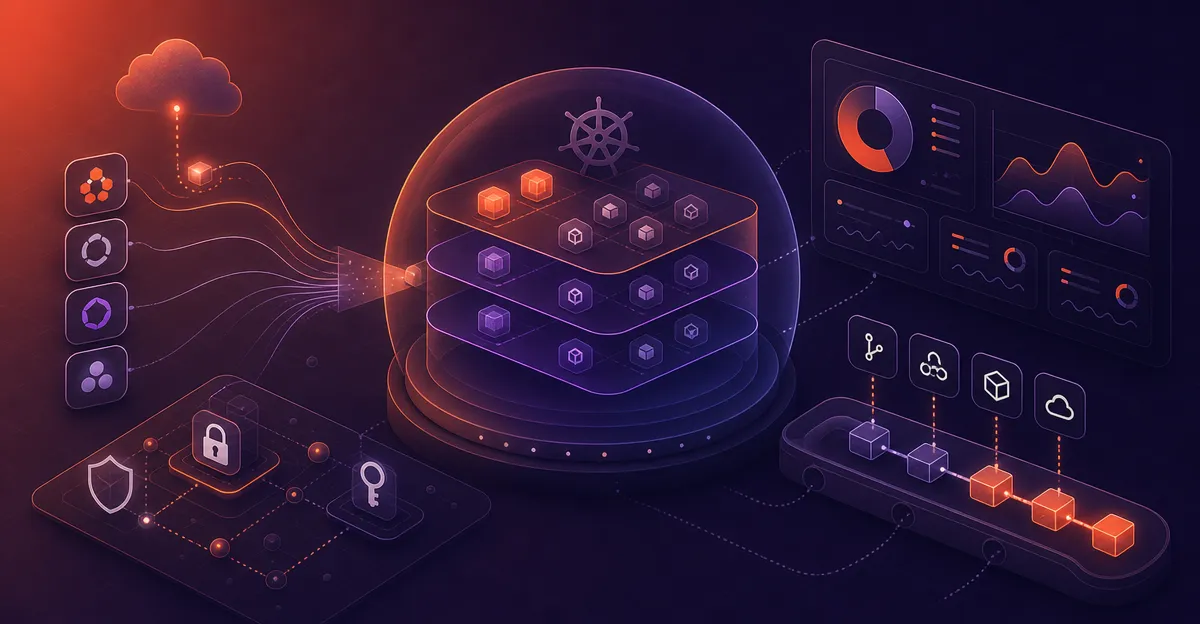
Instead of provisioning multiple clusters, we can use namespace-based multi-tenancy to let multiple teams work independently within a single cluster.
Each team gets its own namespace with strict isolation and policy enforcement, enabling:
-
Autonomy: Teams can deploy and manage their own applications
-
Security: No cross-team access or interference
-
Efficiency: Shared infrastructure with better resource utilization
-
Consistency: Centralized policy, logging, and monitoring
But how do we implement this safely?
Key Requirements for Safe Cluster Sharing
-
Namespace Isolation
Use dedicated namespaces for each team with clear ownership
-
RBAC (Role-Based Access Control)
Define granular permissions so teams can only access what they own
-
NetworkPolicies
Isolate network traffic between namespaces
-
ResourceQuotas and LimitRanges
Prevent one team’s resource usage from impacting others
-
Pod Security Standards (PSS)
Enforce best practices for container security
-
Standardized Observability and Tooling
Provide shared access to logging, metrics, and GitOps pipelines — all scoped per team
-
Automation for Onboarding
Quickly and consistently provision team environments without manual steps
The Tool to Make It Work: Stakater Multi-Tenant Operator (MTO)
Stakater MTO is a Kubernetes-native operator that makes secure, namespace-based multi-tenancy easy to implement and scale.
With MTO, we can:
-
Create isolated namespaces for each team using CRDs
-
Automatically apply RBAC, NetworkPolicies, quotas, and PSS
-
Integrate with GitOps, monitoring, logging, and backup systems
-
Enable self-service onboarding for teams in minutes
-
Maintain centralized control and governance
Real-World Scenario
Let’s say we’re a mid-sized company with teams for:
-
Mobile
-
Backend
-
QA
-
Data Science
-
DevOps
Instead of provisioning five separate clusters, we run all five teams in one shared cluster using MTO. Each team gets:
-
A secure, isolated namespace
-
Custom access permissions
-
Resource limits
-
Standardized tool integrations
The result? Lower cost, better performance, and faster innovation.
Final Thoughts
Yes, we can safely share a single Kubernetes cluster across multiple internal teams. With the right isolation mechanisms and tools like Stakater MTO, we can scale Kubernetes without scaling complexity.
-
Let’s stop wasting time and money managing unnecessary clusters.
-
Let’s start enabling secure, efficient Kubernetes for every team.
Ready to make your Kubernetes strategy smarter? Let’s talk about Stakater MTO.