Why Kubernetes Multi-Tenancy is the Next DevOps Standard
Discover how Kubernetes multi-tenancy is redefining DevOps, enabling teams to share clusters efficiently while maintaining security and scalability.
Kubernetes has become the de facto orchestration platform for deploying modern, cloud-native applications. It’s redefined how we scale, ship, and manage workloads. But as our DevOps practices mature, a new expectation is emerging: the need to serve multiple teams, environments, and applications efficiently, without spinning up a new cluster for each one.
Welcome to the era of Kubernetes multi-tenancy — a new standard that’s reshaping how we design platforms.
The Evolution of DevOps on Kubernetes
Early Kubernetes adoption was team-centric: one team, one cluster. But that approach led to excessive infrastructure overhead, duplicated tooling, inconsistent governance, and high operational costs.
As our Kubernetes platforms matured, DevOps teams shifted toward centralization:
-
Shared clusters with consistent tooling
-
Centralized observability and security
-
Self-service environments for developers
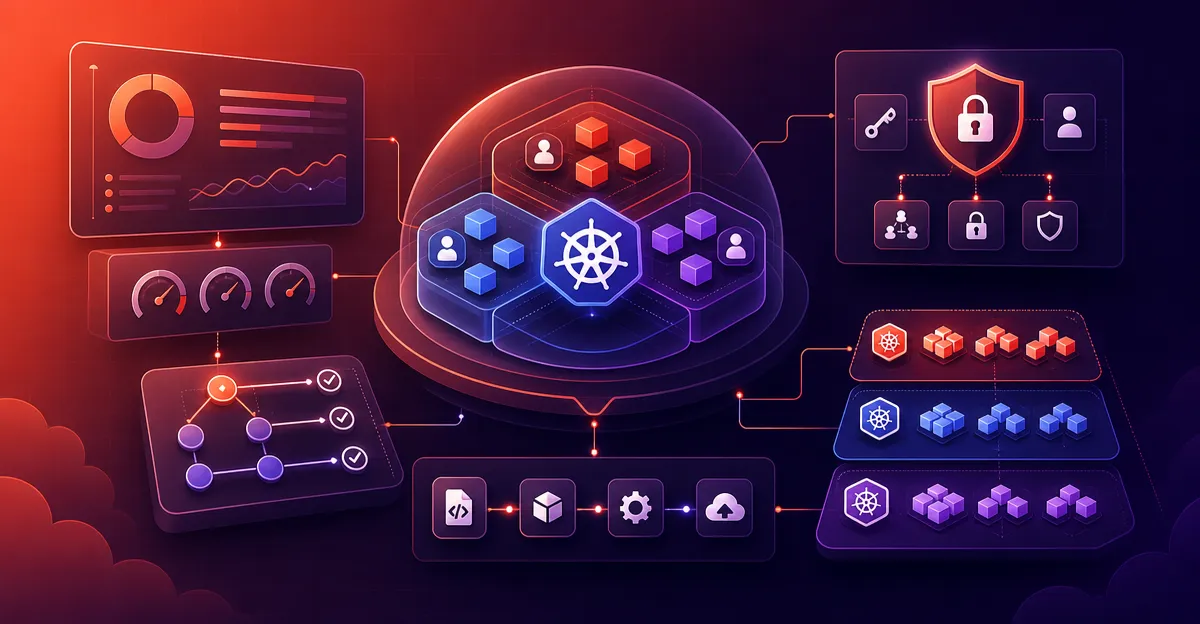
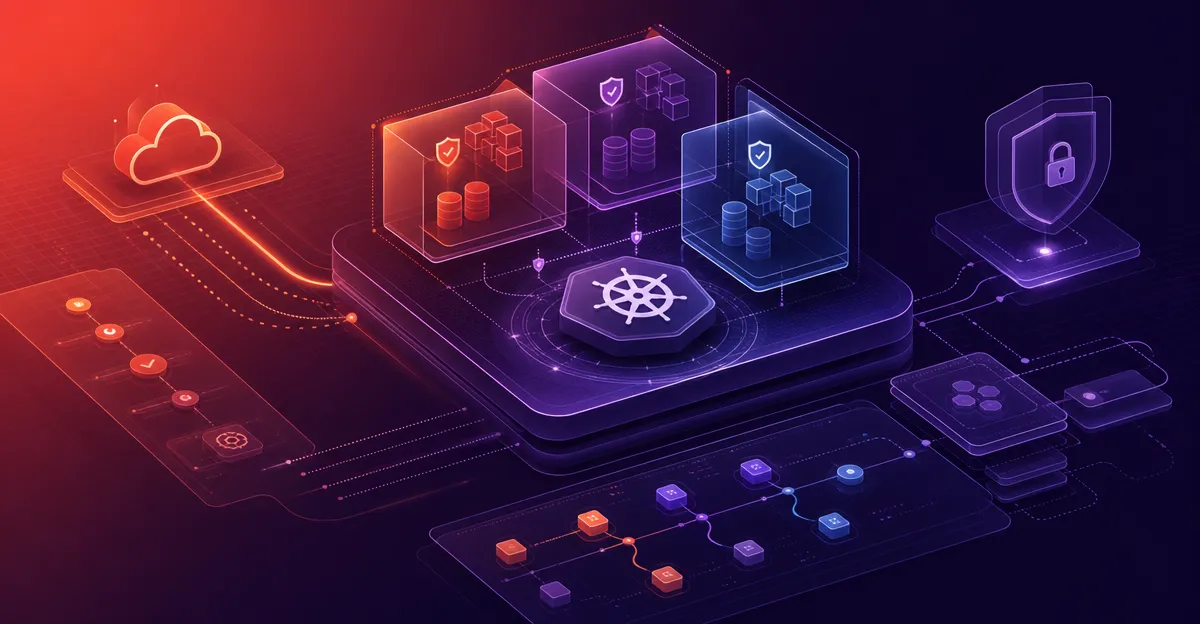
To make this work, we turned to multi-tenancy — logically dividing one cluster to serve many users or teams safely and efficiently.
Why Multi-Tenancy is Becoming the DevOps Default
Multi-tenancy is no longer an advanced feature — it’s becoming a foundation of modern Kubernetes platforms. Here’s why:
Cost Efficiency
Operating dozens of clusters is expensive. Multi-tenancy lets us share resources while enforcing boundaries, cutting down infrastructure and tooling duplication.
Platform Standardization
Our DevOps teams can set guardrails — quotas, security policies, RBAC — centrally, ensuring every tenant is compliant by default.
Developer Velocity
Teams can get isolated, production-like environments in minutes — without waiting for ops to spin up new clusters.
Scalability
We can onboard dozens, even hundreds, of tenants without ballooning the number of clusters to manage.
Compliance and Control
Multi-tenancy makes it easier to meet frameworks like SOC 2 and ISO 27001, thanks to consistent isolation and centralized policy enforcement.
What Does Good Multi-Tenancy Look Like?
To become a true DevOps standard, multi-tenancy needs to be:
-
Secure: Strong isolation through namespaces, RBAC, NetworkPolicies, and Pod Security
-
Scalable: Easy to manage without increasing ops toil for each tenant
-
Standardized: Consistent templates, quotas, and policies applied across the board
-
Self-Service: Developers get what they need without manual intervention
-
Auditable: All changes tracked and policy enforcement visible
Achieving this requires automation, policy-as-code, and a strong platform mindset.
Enter Stakater Multi-Tenant Operator (MTO)
The Stakater Multi-Tenant Operator (MTO) delivers exactly what modern DevOps teams need for scalable, secure multi-tenancy:
-
Declarative Tenants: Use CRDs to define teams, quotas, and integrations
-
RBAC & Namespace Automation: Achieve isolation without manual setup
-
Quota Classes: Enforce fair resource usage for every tenant
-
Network and Pod Security Enforcement: Default deny policies and restricted workloads
-
Observability and FinOps Support: Showback, cost attribution, and hibernation
-
GitOps Ready: Manage tenants via Git and sync with ArgoCD
-
Compliance Aligned: Supports standards like ISO 27001 and SOC 2
MTO transforms Kubernetes into a multi-tenant platform-as-a-service, giving our DevOps teams the control they need — and our developers the autonomy they want.
Final Thoughts
As more teams adopt Kubernetes and organizations push for platform consistency, multi-tenancy is becoming the default operating model for DevOps at scale.
Rather than wrangling dozens of bespoke clusters, our DevOps teams are building shared platforms with baked-in guardrails — and Stakater MTO is leading the way.
Multi-tenancy isn’t just the future. It’s the new DevOps standard.